

Welcome Back!
CHAPTER 7
Chapter seven, “Alcohol and Tobacco”, explained the consequences of alcohol and tobacco use. The chapter begins by explaining how alcohol, which has been consumed by people throughout history, is used by about 50% of Americans on a regular basis. Unlike alcohol, tobacco use has actually declined in recent decades. Still, 36 million Americans report to have smoked at least once in the past month.
Alcohol is the most common drug used on college campuses. Many of these college students engage in something called binge drinking. This is where for men, five or more drinks are consumed in two hours, and for women, four or mow drinks are consumed. Binge drinking can have dangerous consequences, such as alcohol poisoning and even death. Independence, stress, and social pressures are all contributing factors to college drinking. In a recent study, many students reported doing things under the influence that they later regretted or forgot completely what they did. However, high amounts of college students fortunately reported still having safe sex even when they were under the influence of alcohol. Alcohol is linked to poorer sleep, which has a profound negative impact of the academic performance of students who drink regularly. However, poor academic performance is just one of the many consequences of college drinking. Sixty-one percent of women in college who reported to have been sexually assaulted, had been under the influence of alcohol during the attack. One way that many colleges have attempted to stop the alcohol problems has included required web seminars for incoming freshman. This is something that I have seen BSU use, as I was required to take it even as a transferring sophomore.
Ethyl alcohol, made by a fermentation process, is made of tiny molecules that allow for 20 percent of it to be absorbed through the stomach lining. Things like body weight, the amount consumed, and even mood all determine how quickly that your body absorbs alcohol. It has been proven that quicker absorption of alcohol is related to having a more tense mood while drinking. Consuming energy drinks at the same time as alcohol is something that is often done by students. This can prove to increase the dangers of alcohol. Mixing these drinks leads to a delay in intoxication symptoms and sleepiness, which leads to people consuming larger quantities of alcohol. High concentrations of alcohol , which leads to slower absorption, can cause irritation in the stomach and vomiting.
Once in the bloodstream, alcohol circulated throughout the body and is metabolized in the liver. It is then converted to acetaldehyde, which can cause nausea, vomiting, and eventually liver damage. Alcohol is measured in the ratio of alcohol to total blood volume. This is referred to as blood alcohol concentration (BAC). Different BAC levels correspond to different effects on the body. For example, a BAC of 0.02 corresponds to elevated mood and a relaxed feeling, while a BAC of 0.10 corresponds to impaired driving. Breathalyzers and urine tests can determine if someone is legally intoxicated. Over time, with regular and heavy alcohol use, the body can become more and more tolerant to the effects of alcohol.
Alcohol consumption can have both short-term and long-term effects on your health. The most dramatic effects of alcohol occur in the central nervous system. With alcohol, the system depresses, causing decreased pulse, breathing, and blood pressure. Short-term effects of alcohol consumption include hangovers, which is experienced the morning after drinking. This includes things like upset stomach, anxiety, and headache. Hangovers take about 12 hours to recover from. Other short-term consequences of alcohol consumption include increase in behavior that leads to injury, less than safe sexual decisions, sexual assault, weight gain, and alcohol poisoning. Alcohol poisoning occurs when someone’s BAC quickly reaches a lethal range. This can lead to death, which often occurs as a result of someone choking on their own vomit.
On the other hand, dependence and abuse of alcohol have long-term effects. One of the dangers of alcohol abuse over time is cirrhosis of the liver, where the liver forms scar tissue over time. This damage is permanent if drinking does not decrease. Some evidence even supports that high levels alcohol can lead to a higher risk of breast cancer. Alcohol also decreases the ability for the pancreas to function and for our body’s ability to fight viruses.
Cravings, loss of control, and dependence all characterize alcohol use disorder. Being alarmed at one’s own drinking habits is a sign that it may be a problem. There are many steps that you can take to reduce alcohol consumption. These include setting drinking goals, keeping a journal of your drinking, keeping little to no alcohol in your home, and staying active.
Only a small percentage of alcoholics ever receive treatment in a facility. This is due to things like not being able to admit the problem and and social stigma. Once someone decides that they will go through the process of detoxification, symptoms of delusion and agitated behavior may follow. Treatment facilities put alcoholics through series of physical examinations and therapy sessions. As with any addiction, relapse is possible. This can be avoided with support groups, maintaining stability, and assuming responsibility for one’s own actions.
Tobacco is another thing that is heavily used both in the U.S and on college campuses. Ten percent of college student’s report to have smoked tobacco in the past month, mostly to reduce stress and fit in. Nicotine, tar, and carbon monoxide are all dangerous components of tobacco and its additives. Filtered cigarettes are the most common tobacco product used. Although they have lower amounts of these dangerous components, users end up smoking more of them and exposing themselves to more danger. Other tobacco products that pose a threat are chewing tobacco, cigars, vapes. Tobacco leads to things like increased risk for stroke, colds, flus, and lung cancer. It can also lead to risk in others, even those who do not smoke. This is known as secondhand smoke. Children are especially affected by second hand smoke, and can experience increased coughing and asthma.
Many tissues damaged by smoking can be repaired if the addiction is broken. Within 15 years of quitting, the risk of coronary heart disease reaches the same level as one who had never smoked. Quitting smoking can be aided by medication and mindfulness. When reading this, I connected it to how I wanted to use mindfulness to help aid in my goal. Being aware of how you feel and what your actions due can help in quitting smoking, but also in reaching other goals you may have. This week, I have been successful in maintaining my mindfulness. I especially pay attention to how my body feels when I eat certain foods. I feel noticeably better when I am getting the adequate amount of fruits and veggies in for the day. This is one thing that motivated me to keep on with my goal.
CHAPTER 8
Chapter eight, “Nutrition”, explains the important aspects of nutrition and what we can do to improve in this subject. In order to work successfully, our bodies require certain nutrients. We get these nutrients through foods. Water, proteins, carbohydrates, and fats are needed in high amounts and are called macronutrients. One the other hand, micronutrients are needed in smaller amounts and include vitamins and minerals.
One important essential nutrient is water, which aids cells, transports them throughout the body, and regulates our pH balance, It is recommended that women should get about 9 cups a day and men should get about 13. Reading about the importance of water encouraged me to stay on track on the other part of my goal, which is to drink more water. This is a part that I have been slightly neglecting some days because of my busy schedule. This chapter explains the importance of drinking the adequate amount of water, and has encouraged me this week to pick up my water bottle more often while at work and throughout my day.
Protein is another essential nutrient and are found in every cell in our body. They work to repair muscle, bone, skin, and blood cells. Since I am a vegetarian, I often worry about my protein intake, and rely heavily on veggies to get the correct amount. However, this chapter has taught me that nearly all plant protein is incomplete protein, meaning that it lacks in essential amino acids. This has affected how I have moved forward in my goal this week. The book suggests that by combining different plant proteins, it is easier to get all of the essential proteins that we need. Therefore, I have made sure to get in legumes, grains, nuts, seeds, and green leafy veggies into my diet. Having a more varied source of protein is something that I didn’t know was important. Therefore, I am glad that this chapter has brought this to my attention and has given me suggestions on how to work on it.
Carbohydrates and fats are other essential nutrients that our body’s need. Carbohydrates supply us with energy by easily being converted into glucose, which is the energy source for human cells. Simple carbs can be found in fruits, veggies, and dairy. On the other hand, complex carbs can be found in grains, legumes, cereals, and other vegetables. Fats are another good source of fuel for our body. They also play a role in maintaining hair and skin health, insulating organs, and maintaining body temperature.
This chapter also taught me how to read a food label better. That, mixed with a better understanding of the essential nutrients that our bodies need, has helped me this week pick out better foods. Although my health goal is to eat more fruits and veggies, it can’t hurt to improve in other areas of my nutrition. Eating more fruits and veggies has made me want to start eating better in every aspect of my diet.
This chapter also talked about how to plan a healthy diet. One thing that they suggested doing in making half your plate fruits and vegetables. They also talked about how you should choose red, orange, and dark green veggies, which is something that I have been trying to do with a lot of my meals. The chapter also goes over how you should reduce empty calories. This is something that I keep in mind when choosing fruits and veggies over other foods that provide me with little nutritional gain.
The chapter also talks about vegetarianism, which the book states is a healthy alternative to a meat-based diet. The chapter states this, but only if the person is paying special attention to their diet to make sure that they are not deficient in any area. This ties into my goal, because as a vegetarian, I have been putting a lot of thought into what I eat daily to make sure that I am getting what I need. Eating more fruits and veggies has allowed me to get many nutrients that I need, and has made me more mindful when considering other nutrients as well.
This chapter also touches on food allergies and hypersensitivities. Symptoms of allergic reactions can vary, but can include tingling mouth, swelling of mouth, and difficulty breathing. Food allergy can even turn deadly when something called anaphylaxis occurs. This is yet another thing that ties in my goal of healthy eating. I have a hypersensitivity to gluten, which affects my diet in many way. Although this doesn’t affect the amount of fruits and veggies I am eating, it affects how mindful I am when choosing other foods to make sure that I am getting the proper nutrients discussed in this chapter.
Organic food are those produced with no hormones, pesticides, and chemicals. Many people buy organic produce to ensure that they are not being exposed to harsh substances. It is advised that you should always scrub produce before consumption to make sure that you are not being exposed to these substances. This is something that I have recently been doing because of my increase in fruit and veggie consumption. I even bought a scrubber to scrub my vegetables clean before eating them!
CHAPTER 9
Chapter nine, “Weight Management and Body Image”, talks about the importance of maintaining a healthy body weight and having a good image of your own body. The United States has the highest proportion of obesity at 13 percent. Environments that promote increased unhealthy food intake and physical inactivity are called obesogenic. This is a word often used to describe our society, which I myself can see everyday. With commercials for processed junk food and fast food restaurants, our society doesn’t always encourage people to do their best with their health. Obesity often begins in youth, partly due to easy access to fast food and fewer physical activity requirements in schools. Obesity is not only a problem in the U.S, as the obesity rate has increased globally since 1980. Obesity is also higher in certain populations. For example, Hispanic men and non-Hispanic white men are more likely to be overweight than non-Hispanic black men.
Being overweight has many negative effects on one’s health. Obesity is coming up behind smoking as one of the leading causes of preventable death in the United States. The work preventable made me stop and think about why I was embarking on my health journey. The main thing that motivates me to improve my eating habits is that I can control how healthy I am in the future. The fact that health problems can be prevented by healthy eating motivates me to take care of myself now in order for me to also be healthy i the future. Obesity is linked to serious health conditions like cardiovascular disease, stroke, cancer, hypertension, and sleep apnea. Aside from these health conditions, obesity is also linked to a higher cost for health care.
Obesity can be linked to genetics, as some suggest that there is a genetic basis for how quickly one feels full. Environmental factors such as how often we are exposed to unhealthy food advertising, how fast paced our lives are, and misleading portion size information also determine how likely we are to become overweight or obese. Along with these factors, our lifestyle in general can also determine out weight. How much time we spend sitting has been linked to obesity. The chapter describes how simply standing while ready can decrease our changes of becoming overweight by keeping our leg muscles engaged for a period of time. Pathogens, toxins, drugs, and sleep deprivation also have strong links to increased weight.
To technically be overweight, you must have a body weight more than 10 percent above healthy levels. Being more than 20 percent over healthy levels leads you into the obesity category. On the other hand, being underweight is also dangerous and can also cause problems such as hair loss and impaired vision.
One way to make sure that you are maintaining a healthy weight is by practicing mindful eating and improving eating habits. One way to do this is by understanding calories, which is the amount of energy gained from food or used up during activity. Understanding the importance of exercise is also crucial. Being mindful of your eating habits is yet another way to improve your body weight management and overall health. Mindless eating is often done, which is when we put food into our mouths that we are not even noticing. This leads to overeating, which in turn leads to becoming overweight. We should be more mindful in our eating habits, eating when we are truly hungry and understanding why we are eating and what we are eating. These past weeks I have definitely been trying to be more mindful in my eating habits. I do this by listening to my body and thinking about what each food I eat is going to do for my body. Other strategies that this chapter lists are to keep healthy snacks around in place of unhealthy ones, to choose natural beverages, and to drink hot drinks to keep you feeling satisfied. These are all tips that I will keep in mind when trying to stay healthy while on my health journey.
Body image includes several aspects, including how you see your body, how you feel about your body, and how you act on these thoughts about your body. Social media is one thing that can lead to a negative body image, along with parental pressures and bullying. The chapter lists several tips that can be used to improve body image. Some of these tips are making a list of your good qualities, wearing comfortable clothes that make you feel good, and to show appreciation for your body by making time for a nap or relaxing.
Poor body image can lead to eating disorders, which is when someone exhibits severe disturbances in thoughts, behaviors, and body functioning. Twenty million women and ten million men in the United States will experience an eating disorder in their lifetime. This could be in the form of anorexia, bulimia, binge eating, or a number of other eating disorders that have been defined by the American Psychiatric Association. Many eating disorders have their roots in the person not having control in some aspect of their lives and wanting to have control over food as a response. Poor body image can also cause exercise disorders. Compulsive exercise is often used by people to regulate their emotions. Muscle dysmorphia is an example of an exercise disorder. With this, a person feels as though they are not muscular enough.
Although healthy eating is great for you, when taken to an extreme it can have adverse effects. This is definitely something to keep in mind as I continue on my healthy eating journey. I believe that I do this by still eating things that I enjoy and allowing myself to eat foods that may not have any nutritional benefit for me. In fact, as I write this blog, I am enjoying some coconut milk ice cream! So good! I have to remember that you can still live a healthy lifestyle while enjoying what you eat and enjoying some ice cream here and there!
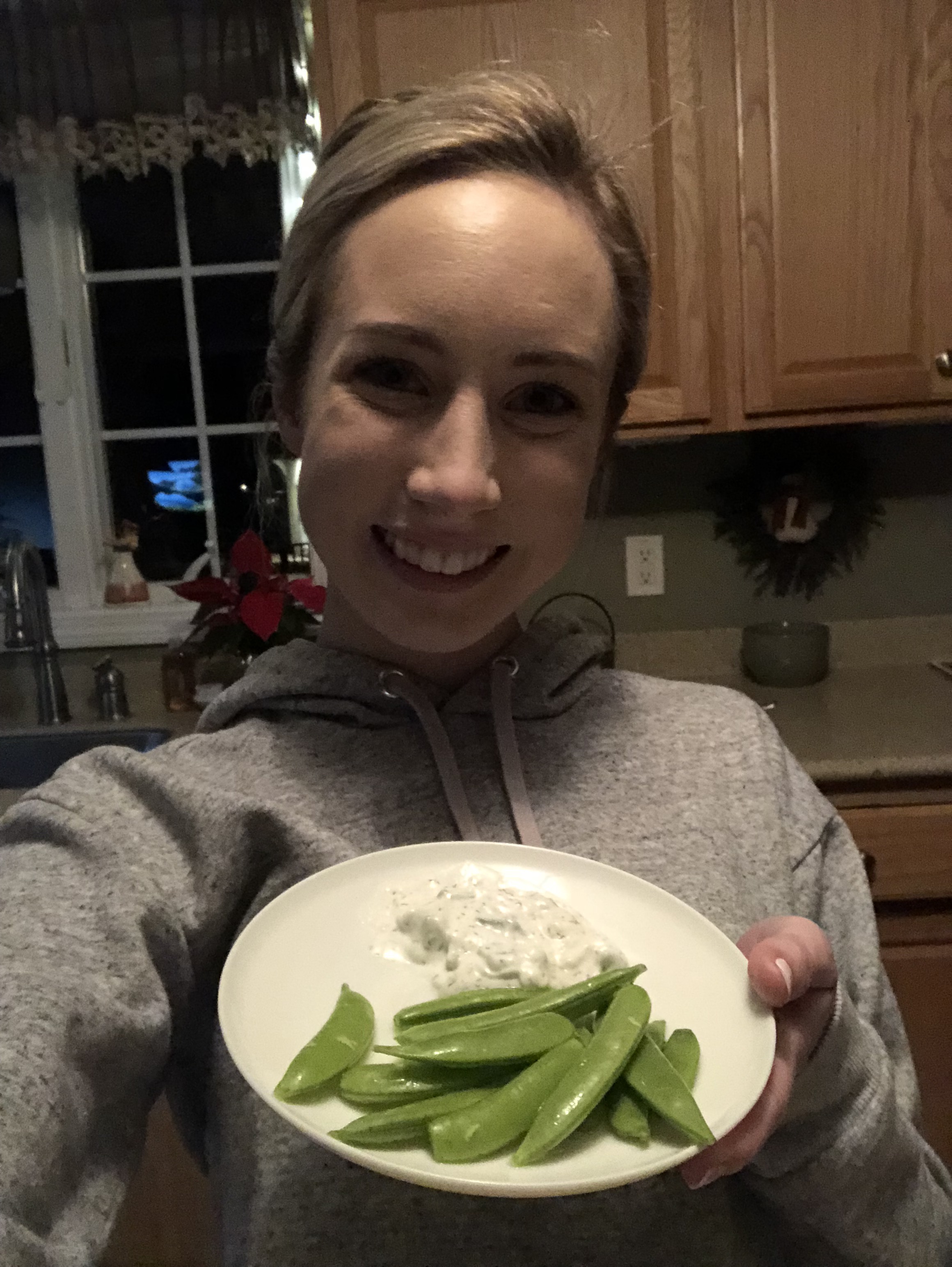
For a healthy snack this week, I tried something new. I had some snap peas dipped in some tzatziki, which is cucumber and garlic dip! This was a nice snack to mix in this week and I highly recommend trying it!
Sources: Donatelle, R. J. (2018). My health. Upper Saddle River: Pearson.
 AndreaEstabrooksBlog