

Welcome Back!
CHAPTER 4
Chapter four, “Relationships and Sexuality”, covered a wide array of elements related to sexuality, relationships, and problems that may occur with these things. An important base to understand before beginning this chapter is the definition of ‘sexuality’, which the book defines as “the thoughts, feelings, and behaviors associated with being male or female, experiencing attraction, being in love, and being in relationships that include sexual intimacy and activity”. This definition encompasses what this chapter is all about.
The chapter discusses the different types of relationships that can occur, from family, to friends, and to romantic relationships. All of these different relationships can have something called intimacy, which is defined by four main characteristics. These include behavioral independence, need fulfillment, emotional attachment, and emotional availability. These elements include thing like fulfilling our needs, giving and receiving emotions, and interdependency. Such as with family and friends, intimate relationships don’t always have to have anything to do with sex. However, when they do, this can lead to romantic relationships. Overall, love can be defined by a common list of elements. Psychologist Robert Sternberg created the Triangle of Love, which helps to define these common elements. He said that the key of loving relationships is intimacy, passion and commitment. Different combinations of these elements can lead to different kinds of relationships, from relationships of empty love (commitment only) to consummate love, which Sternberg described as a perfect combo of all three elements.
The first thing in this chapter that I was able to connect to my goals was the importance of family, friends, and relationships in general to me as I work towards my goal. Interdependency sparked my interest as I was reading this chapter. It reminded me of my boyfriend and I, who play a huge role in making eachother better people. He helps me achieve my goals and has been supportive and excited to help me make healthy meals and snack these past weeks. I guess he probably does it so he can eat the yummy stuff we make also! I think that our ability to rely on each other for motivation allows us to have a more close and intimate relationship. Along with this, my friends and family are also supportive with my goals, and play a huge role in my motivation to eat healthier.
Throughout the course of a relationship, there are things that can go wrong and strategies for creating a lasting and successful relationship. The chapter defines one of the key elements to a relationship as trust, which is measured by predictability, dependability, and faith. Along with trust, proximity is also said to be an important factor in the success of a blooming relationship. The more often you see someone, the chapter notes, the more likely it is for the relationship to occur. Once the relationship is occuring, couples must be willing to confront any problems that come up. One problem that many couples face is jealousy. Believing that the person you are in a relationship with may like someone other than you can bring out underlying problems that may be occuring, like insecurity and possessiveness. Too much jealousy can threaten a healthy relationship. Other issues that may occur is handling the distribution of power and dealing with unmet expectations. Addressing these issues should include an understanding that power should be shared and that expectations should be communicated clearly.
This chapter also touches on the effects of social media on relationships. With the strong presence and use of dating sites and online dating, dating has revolutionized. With this change, there are also new dangers associated with meeting people online, due to the threat that you do not truly know who is on the other side of the computer. Because of this, the chapter discusses how to stay safe while online. These safety tips include meeting in a public space and letting someone know where you will be going. The chapter also discusses later how important it is to be honest in your online profiles when meeting people over the internet. This honesty and responsibility also comes into play with other aspects of your life, including employment. Many employers use social media screening to weed out future employers. Because of this, the nature of comments, privacy settings, and your reputation should all be kept in mind when using the internet.
The chapter discusses the importance of communication in a relationship, which includes things like gestures, words, and body language. How we express ourselves through these types of communication plays a role in how other interact back to us. For example, when we show that we are happy and positive, other people are more likely to open up to us. Opening up, according to the chapter, is also called self-disclosure, which is also an important element of relationships. You must be willing to share parts of yourself with the person you are in a relationship with. Styles of communications vary when comparing males and females. For example, women are more likely to smile and take up less space, while men are more likely to frown and take up more of the space. Understanding these differences can help people understand why someone they are communicating with is acting as they are, possibly avoiding confusion and frustration.
Other skills for better communication, as noted by the chapter, mindful listening and nonverbal communication. Some ways that we can practice more mindful listening is by avoiding distractions and asking for clarification when you need it. Nonverbal communication can be used through eye contact and gestures, and can contribute to your partner receiving a better understanding of what you are saying. The chapter goes on to discuss how communication, and other problems, can be resolved. This includes a series of steps, which are the following: 1. Identify the problem, 2. Generate possible solutions, 3. Evaluate solutions, 4. Decide on the best solution, 5. Implement to solution, and 6. Follow up on the solution. Overall, following these steps and treating your partner as you would want to be treated can help resolve conflicts that may arise.
When relationships succeed, committed relationships occur. One example of this is marriage, which is a legal agreement between two people. In general, people in the U.S are not getting married as often and as young as they once were. Another example of committed relationships is cohabitation, which is when two unmarried people in a relationship liver together. This is becoming an alternative to marriage to many people, or a step before marriage for others. Gay and lesbian marriages are also becoming more accepted, but they often face more challenges, as discrimination still exists towards these groups. On the opposite of successful committed relationships are those who break up. Knowing how to deal with the loss of a relationship, for whatever reason, is important. This includes acknowledging the rough spot and spending time with family and friends.
Another important aspect of this chapter was sexuality. They began this topic with defining sexuality, which is your sense of your own sexual being. Your sexual identity is influenced by genetics, psychology, environment, and social interactions. One element of sexuality that this chapter discusses is gender roles. According to how parents influence a child’s decision can influence how the child presents as male or female. Gender role stereotypes, which is how each gender is expected to act according to society, can cause conflict when it comes to expressing maleness and femaleness. On the other hand is gender identity, which is one’s sense of being male or female. When conflict occurs in this, the person is transgender.
Responsible and satisfying sexual behavior includes acknowledging and accepting your sexual identity and orientation. Along with this, understanding sex and good communications also serve as good foundations for responsible and adequate sexual behavior. Things like drugs and alcohol can also be contributors to unsatisfying sexual behavior.
As mentioned before, something in this chapter that I was able to connect to my goals was the importance of successful and intimate relationships when you are working towards a goal. Many tips from this chapter can be used to build my relationships stronger, which will in turn help me be the best I can be in my goals. However, another aspect of this chapter that I linked to my goal was the importance of self-nurturance. The chapter discusses the importance of realistic appreciation of your self worth and ability. I know this is important in my goals, because I know I can’t be too hard on myself and expect my diet to contain all fruits and veggies and none of the fun stuff! But recognizing that I do have the ability to do better motivated me to keep going and doing better and better each day.
If you don’t believe in yourself you will fall short in achieving your goals! You are your own worst critic, and this chapter emphasized this, noting the importance of good self-esteem and how important it is as a base for everything in your life.
CHAPTER 5
Chapter five, “Reproductive Choices”, discusses the different methods of contraception and what happen when someone does get pregnant. Technology today allows us to better be able to control fertility, which is a person’s ability to reproduce. Not only are contraceptive methods used to prevent pregnancy, but they can also be used to prevent STIs, which are sexually transmitted infections.
Barrier methods of contraception work to prevent conception by preventing the sperm from reaching the egg, which is how conception occurs. Examples of this method are the male and female condoms. The male condom is a thin layer of material that is rolled onto the man’s penis to catch the semen before it is able to enter the vagina. The use of the proper lubrication, proper storage, and inspection of condoms before use can all aid in more effective use of male condoms. Although the only means of birth control for men and a good protector against STIs, the male condom has a lot of potential for user error, leading to a typical use effectiveness of 82%. The female condom, on the other hand, is a thin sheath that is rather inserted into the vagina. Although there is less loss of sensation as compared to the male condom and a protection against STIs, the female condom also has room for user error, breakage, and has a typical use effectiveness of just 79%.
There are also several other barrier methods for preventing pregnancy. Spermicides are one of these methods, which are materials used to kill sperm before it has a chance to fertilize. Jellies, creams, and foams are all spermicides that are inserted into the vagina. When inserted far enough, they act as both a chemical and physical barrier against sperm. Suppositories are a little different, as they are inserted into the vagina, where they then melt. They release spermicide that is active for 3 hours. As for the advantages of spermicides, they are cheap, easy to get, and simple to use. However, they are most effective when used with another barrier method such as a condom. When used alone, they offer a 72-82 percent effectiveness. Downsides of spermicides are that they can be messy and may even increase your chance of getting an STI. Another barrier method is a contraceptive sponge, which is moistened with water to activate spermicide and then folded and inserted into the vagina. This method is convenient and even lasts for 24 hours. It offers 91 percent protection with perfect use and 88 percent protection with typical use. On the downside, it only offers limited STI protection and toxic shock syndrome has occurred in some uses. Another barrier method that the chapter discusses is the diaphragm. The diaphragm, invented in the mid-nineteenth century, was actually the first widely used birth control method for women. A shallow cup made of latex, the diaphragm is filled with spermicide and inserted in front of the cervix. The device must be fitted by a medical professional, but after that, the only expense is spermicide. They can be up to 94 percent effective and provide some protections against some STIs. They do, however, have the chance of being used incorrectly and must remain in the vagina for 6 to 8 hours after intercourse.
Another form of contraception that this chapter discusses is hormonal contraception, also known as birth control. This form of birth control contains synthetic estrogen, progestin, or both, which mimic the natural hormones that a women’s ovaries produce during ovulation and the menstrual cycle. This method changed the women’s biology by preventing the release of an egg. The synthetic hormones also change the physical nature of the women’s reproductive system in a way that makes it harder for the sperm to reach the egg if it does get released. Progestin can work to thicken cervical mucus and thin the uterine lining, which both make it harder for the sperm to travel and for an egg to implant. Most pills are more than 99 percent effective at preventing pregnancy when used correctly. As opposed to barrier methods, it is much easier to use birth control pills perfectly. Birth control pills also lessen the severity of PMS symptoms and even prevent many health conditions like ovarian cancers and cysts. Some side effects can come along with the use of birth control pills, including the risk of serious health problems such as blood clots and stroke. Other side effects are nausea, acne, and weight gain.
While birth control pills must be taken every day, other hormonal methods do not need as much maintenance. One of these methods is Xulane, which is a skin patch that is worn for 1 week at a time, for 3 weeks in a row. The patch releases estrogen and progestin into the bloodstream. Advantages that comes with the use of the patch are the it is easier to remember to use than birth control and offers similar health benefits, such as reducing the risk of certain cancers, as birth control. Some disadvantages are that they come with a monthly expense, prescription, and offer no STI protection. Another hormonal method is the NuvaRing, which is a contraceptive ring that is inserted into the vagina by the user and left in for 3 weeks. The ring is removed for the fourth week for a menstrual period. The ring releases estrogen and progestin, and can be up to 99.7 effective with perfect use. Like other hormonal methods, the ring comes with a monthly expense and initial exam. Other disadvantages can be irritation and the fact that you cannot use certain vaginal medications when the ring is inserted. Another hormonal method is the Depo-Provera, which is an injection of long lasting progestin that takes effect 24 hours after injection. One advantage is the possibility of feeling more sexually spontaneous due to the fact that you don’t have to remember to take a pill or insert anything. There are no health risks, can be used while breastfeeding, and there is little chance of error because it is administered by a professional. This method can be up to 99.8 percent effective. On the other hand, the shot offers not STI protection and carries side effects such as headache and anxiety. Lastly, there is the Nexplanon, which is a contraceptive implant that is inserted in the arm. The implant is highly effective with a 99.95 percent effectiveness rate and only needs replacing every 3 years. Advantages include a high cost and side effects such as irritation and scarring.
Another form of contraception is intrauterine devices, or an IUD. Inserted into the uterus, the small plastic device can be left in for 3 to 10 years. They are over 99 percent effective and is effective immediately. They also offer a method that doesn’t interrupt sex. On the other hand, disadvantages may include discomfort, acne, and mood swings. However, these side effects usually go away after the first month or so.
There are also behavioral methods, like withdrawal and abstinence that can be used to prevent pregnancy. If a pair fails to use contraception or their method is misused, an emergency contraceptive is available without a prescription. These pills, known as ECPs, are safe to use but can also be expensive.
Either planned or when contraceptive methods fail or are not used, pregnancy can occur when a sperm meets an egg. With pregnancy, finances, emotional health, and physical health all need to be considered and are important when planning for a baby. Both the health of the mother and the father are important when planning to become pregnant and during pregnancy. Nutrition and exercise are crucial for a healthy baby, especially the nutrients of folic acid and calcium. Smoking and other teratogens can also pose major threat to a developing fetus.
Although it is hard to directly relate my goal to this chapter, I was able to relate it somewhat. When reading about the importance of good nutrition in a mother even before becoming pregnant, I realized yet another important advantage of creating healthy eating habits. Not only does good nutrition set up a healthy future for myself, but it also sets up a healthy future for my children as well. Although I am too young to have children now, starting my good healthy habits now will make it easier to have those same habits when I am looking to get pregnant and eventually have children. It will be important for their development, my health, and their future healthy eating habits as well. Along with things like finances and emotional health, the health of your own body is another important thing to consider when thinking about planning a pregnancy. One day, my healthy habits will allow me to easily check off that box.
CHAPTER 6
Chapter six, “Addiction and Drug Abuse”, is all about the nature of drug abuse, including commonly abused drugs and treatment for those who abuse them. The book defines addiction as “a persistent, compulsive dependence on a behavior or substance, despite ongoing negative consequences”. When a person engages continuously in an addictive behavior, they develop a physiological dependence, in which the body adapts to the behavior. The chapter defines five symptoms that are present in addiction: compulsion, loss of control, negative consequences, denial, and inability to abstain. Biologically, some people are more likely to become addicted to an exposed thing, due to a lack of neurotransmitters in the brain. Prolonged addiction can lead to tolerance, in which large quantities are needed in order to get the desired result. People with low self esteem have also been found to be more susceptible to addiction. Brain processes, such as memory and emotional state, have also been linked to have an effect on susceptibility. The social learning theory also offers the idea that people who see others who suffer from addiction are also more likely to do the same. This is one example of the environmental impact of addiction. Addiction also has a profound effect on the family and friends of the addict, often leading to codependence. This makes it difficult to set boundaries, often leading to family and friends becoming enablers who help the addict to continue on their negative path.
Although drugs and alcohol is the first thing often associated with addiction, other addictions may occur. This includes becoming addicted to gambling, shopping, technology, work, exercise, and sexual behaviors. Although one addiction usually prevails, about 55 percent of addicts have more than one addiction.
There are many different types of drugs, all of which alter the brain in different ways. These drugs can be classified into six categories: prescription, over the counter, recreational, herbal, illicit, and commercial. There are also many different ways that these drugs can be taken into the human body. They can be taken orally, inhaled, injected, transdermal (through the skin), or through suppositories. Through these different ways, the drug eventually makes it way to the bloodstream and to receptor sites, where the drug is able to affect different body or psychological functioning.
Abuse of over-the-counter drugs is common among drug abuse and is seen with things like sleep aids, cold medicines, and diet pills. Opioids and painkillers are also often misused and become addictive. Misuse of drugs is a threat among college campuses, with 12 percent of college students admitting to have illegally using prescription drugs in the past year.
There are many different commonly used drugs, one of which are stimulants, such as cocaine, methamphetamine, and even caffeine. All of these stimulants cause an increase response in the central nervous system, resulting in things like jitters and increased activity. Marijuana is also a common drug that is abused. Marijuana contains THC, which is a psychoactive substance. Prolonged use of marijuana, which is most often smoked, can have negative effects on your lungs that can lead to chronic lung conditions like asthma. Depressants are another commonly used drug, which decreases the activity of your central nervous system. Examples of these are opioids and heroin, both of which can result in extreme withdrawal symptoms. Other commonly used drugs include hallucinogens, inhalants, and anabolic steroids.
Recovering from addiction is often a lifelong experience, often beginning with an intervention. An intervention is a planned process of family and friends to get the addict to break free from denial and admit that they have a problem. After intervention, it is hoped that the addict will be willing to begin a treatment program, starting with abstinence, or refraining from the behavior. The treatment process is long, and consists of the addict adjusting physically and mentally to a live without the behavior they were once addicted to. Medical intervention, coaching, and even vaccines are all ways to help an addict break their addiction. Unfortunately, there is always the possibility of a relapse, or return to the behavior. One way to prevent this is through Mindfulness-Based Relapse Prevention, in which mindfulness is used to bring the person to become aware of the triggers and cravings they may have. Through education, awareness, and funding for programs, it is hoped that illegal drug use problem in the United States can be stopped.
Immediately, this chapter made me think about how some people develop addictions surrounding food. While I have never had an addiction towards junk food, I know that it is a real thing to have a food addiction. On the other hand, I also know that some people become addicted to healthy food and dieting. This can be just as dangerous. I believe that healthy eating is all about finding a happy medium, which is what I try to do day to day with my diet. If I have my fruits and veggies for the day, or even if I slack on a meal, I do not let myself feel guilty for treating myself to a treat at the end of the day. It is when this becomes too often, or when the guilt becomes debilitating, when this could become a problem for some people.
What have I been eating this week?
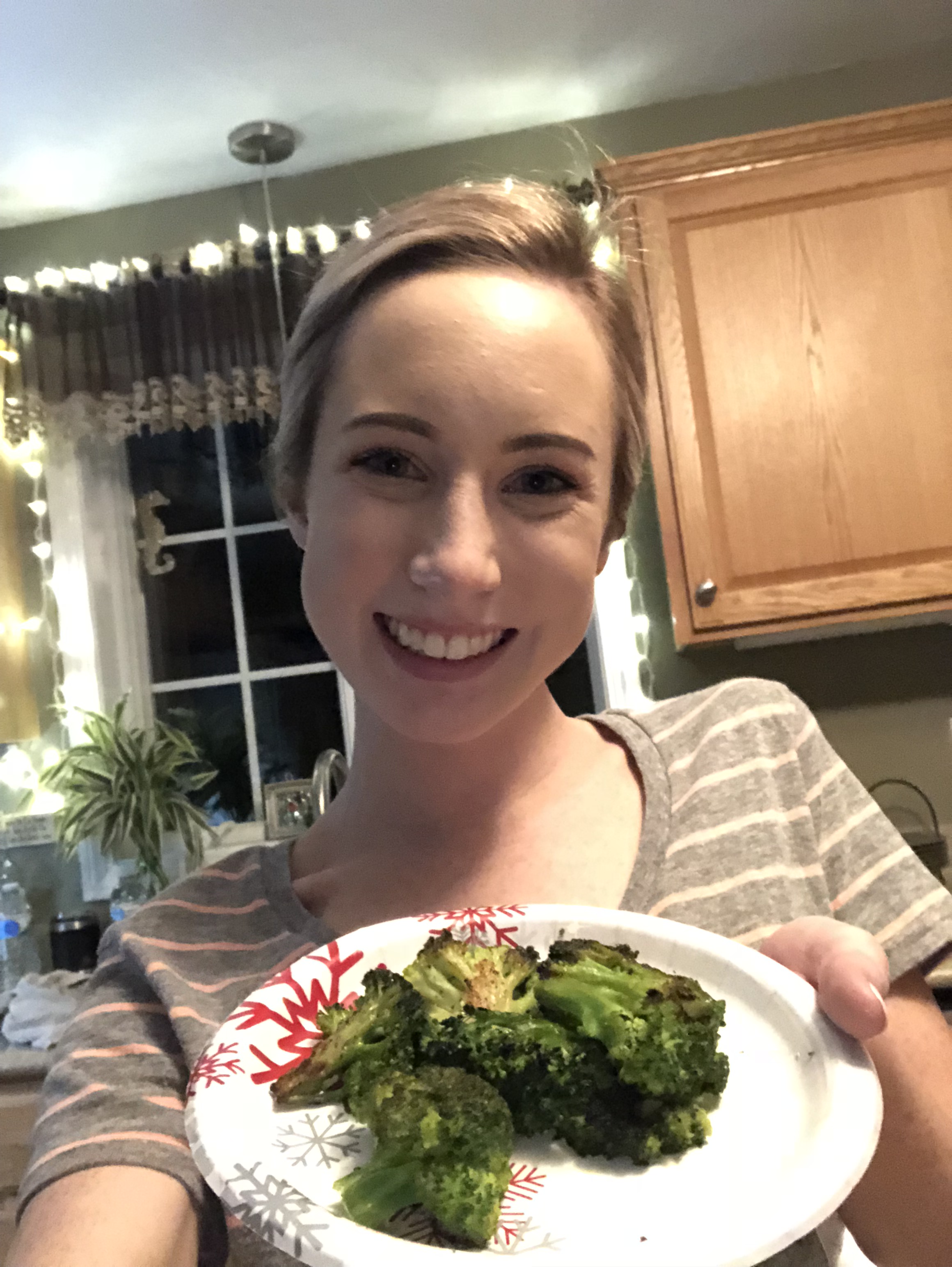
Quick and easy crispy broccoli!
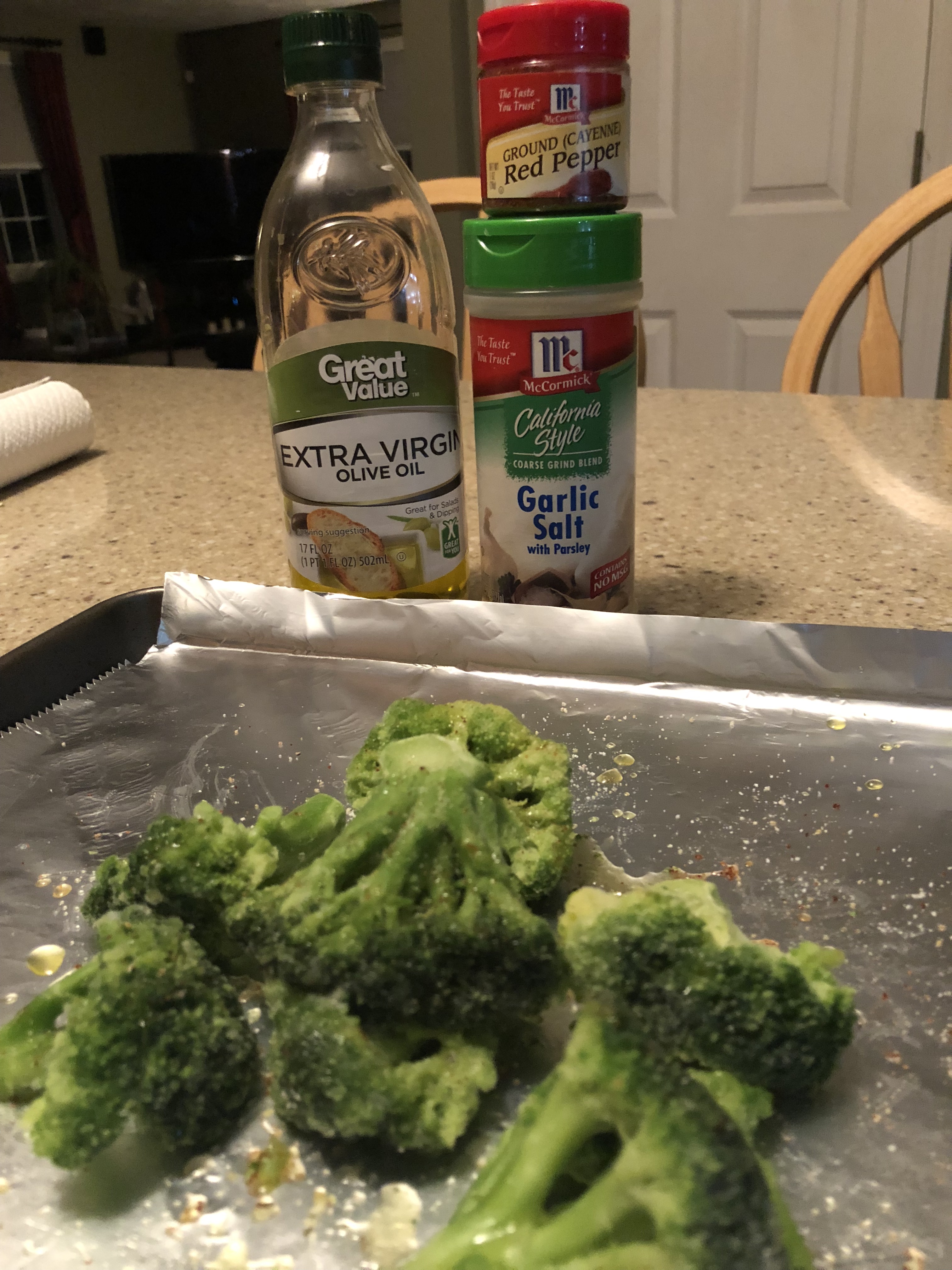
Healthy Snack!
My go-to way to cook veggies is to sprinkle with olive oil and garlic salt and to roast in the oven. So quick and so good! This night, I wanted a snack and knew that I hadn’t reached my goal amount of veggies for the day. So, I grabbed some broccoli, sprinkled with olive oil, garlic salt, and red pepper, and popped them in the oven for 30 minutes until they were nice and crispy.
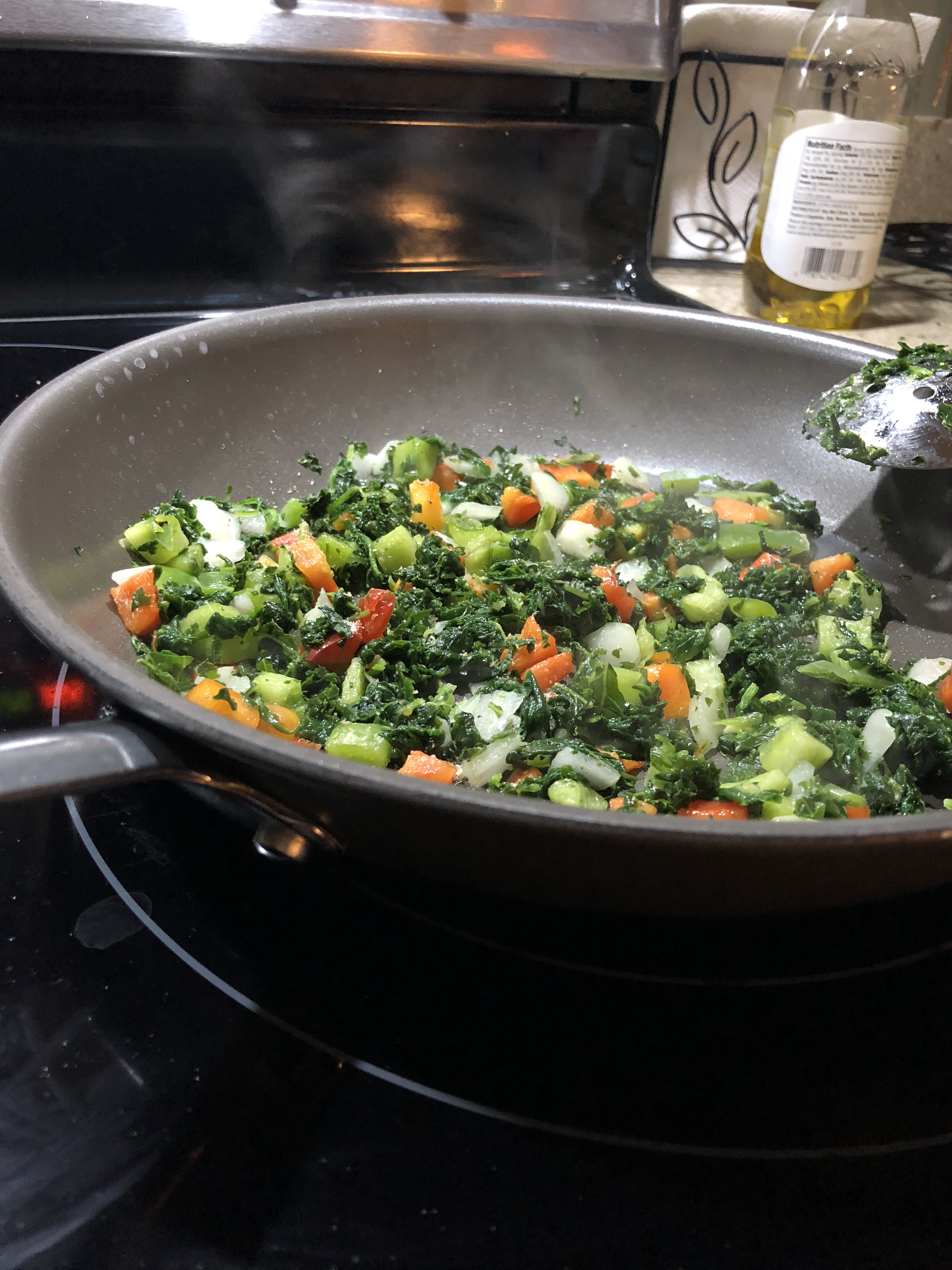
As I mentioned in my previous post, I try to eat the rainbow! This means that I try to get as many colors of fruits and veggies as I can. This ensures that I am getting all of the possible nutrients that each different food has to offer! This picture is from my egg muffins that I made this week that I talk about more below!
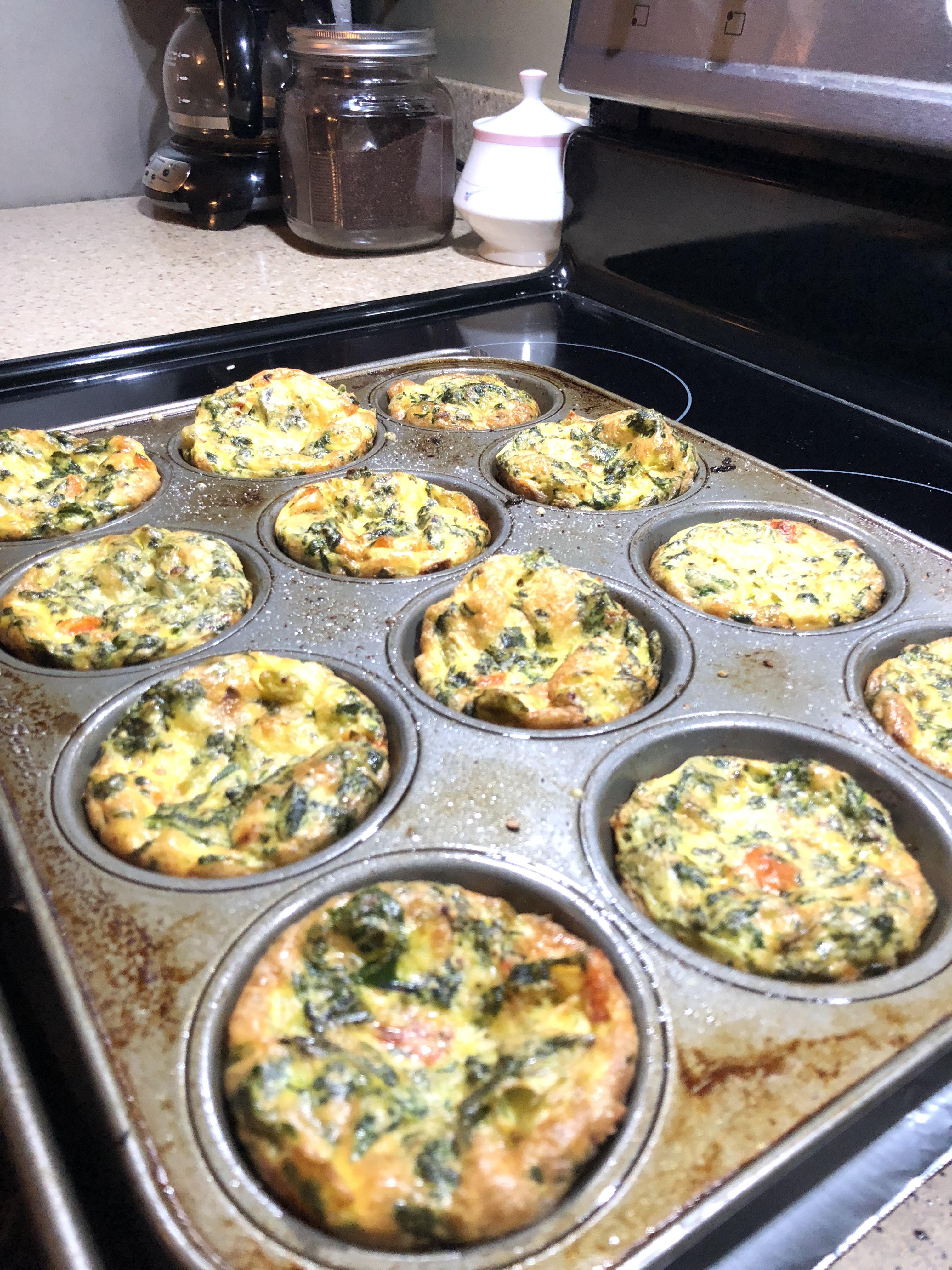
Grab-n-Go Breakfast or snack!
For these egg muffins, I simply beat some eggs and mixed in some veggies that I had sauteed with garlic for about 10 minutes. I added some cheese and seasoning and poured the mixture into a muffin pan. These went into the oven for about 20 minutes. These are great to have either alone or sandwiched between two pieces of bread for a breakfast sandwich! Super good and a great way to get some veggies into your meal!
Sources: Donatelle, R. J. (2018). My health. Upper Saddle River: Pearson.
 AndreaEstabrooksBlog