

Welcome Back!
CHAPTER 13
Chapter 13, “Violence and Unintentional Injuries”, discussed different kinds of crimes and injuries and what you can do to protect yourself and those you love. The chapter opened up by discussing the crime trends in the U.S. Crime often has a lot to do with things like your gender, ethnicity, socioeconomic status, sexuality, and location. From 1970 to the early 2000’s, the FBI reported an increase in crime in the U.S. However, after this, it appeared to have decreased. That is, until 2015, when it saw an overall raise of 1.7%. However, this number only includes reported crimes. This can skew the numbers, because many crimes in the U.S go unreported, especially in the case of sexual assault. In the past decade, violence at school has seen a sharp increase, with things like school shooting and political protests.
Aggression is one of the main contributors to violence. Primary aggression is goal directed, hostile self-assertion that is destructive in nature. On the other hand, reactive aggression is most often an emotional reaction brought about by frustration. Things that contribute to aggression and eventually violence include religious differences, stress and other mental health issues, and societal factors. Aggression and violence has also been linked back to the increase in violent media such as violent video games.
One example of interpersonal violence is homicide. Homicide is murder or non-negligent murder. It is the thirteenth leading cause of death in the U.S and its rate is much higher than that of other developed nations. Other examples of interpersonal violence include hate and bias-motivated crimes. These crimes target those of certain races, ethnicities, sexual orientations, genders, religions, or disabilities. These crimes are often motivated by feelings of thrill, retaliation, and feeling threatened.
Another type of violence is violence within families. One example of this is domestic violence, which is the use of force or control to maintain power over someone in the same home as you. This often occurs between child and parent or between spouses. Another type of violence within families is intimate partner violence. This type of violence is when there is physical, sexual, or psychological harm done to someone by a former or current partner or spouse. Nearly half of all men and women in the U.S have said that they have been psychologically harmed by a partner in their lifetime. In the most extreme of cases, this violence can lead to a murder. 75% of all murder-suicides in the U.S happen between intimate partners. Child abuse and neglect is another type of violence that can occur within families. One example of this is neglect, which is a failure to provide for the needs of a child.
Another type of crime is sexual victimization, which is any instance where an individual is coerced or forced to perform sexual acts with another. One example of this is sexual assault, which is when someone is sexual with another person without their consent. Another example is rape, which is often referred to as the most extreme case of sexual assault. This occurs when there is penetration without the victims consent. 1 in 5 women and 1 in 59 men have reported to have been raped sometime in their life. Fortunately, rape is thought to have declined since the 1990’s, perhaps due to the increased amount of awareness and education. However, it is still an issue that many fall victim of, especially on U.S college campuses. Other forms of sexual violence include sexual harassment and stalking. Sexual harassment is any form of unwelcomed sexual conduct related to employment or student performance. Stalking, on the other hand, is conduct towards another that leads to a reasonable sense of fear. This is another problem that is strongly prevalent on college campuses. College students are 200% more likely to fall victim to stalking than other people.
Collective violence is violence that occurs from one group to another. Gang violence and terrorism are both examples of collective violence. With over 33,000 gangs in the U.S, gang violence has been increasing within the nation within recent years. Gangs often give individuals a sense of self-worth, security, and friendship, which is why nearly 1.4 million people engage in gang activity. Terrorism, on the other hand, is the use of force or violence against persons or property to intimidate or coerce a government, the civilian population, or any segment to promote political or social objectives.
There are many ways that you can lessen your chances of becoming a victim of violence. A big part of this is practicing safe behaviors while using social networking. This includes not posting anything on the internet that you don’t want people to see, not meeting an online stranger in real life when you are alone, and changing your passwords often. Another way to protect yourself is by learning self defense, which can help you protect yourself from rape and other assaults. If a friend does fall victim to rape, you should make sure that you believe them, encourage them to see a doctor, and help them reach authorities.
Because of the prevalence of violence on campuses, colleges across the nation have taken steps to protect their students. This includes reviewing emergency alert systems, having more serious actions to prevent hazing, and increasing law enforcement on campuses. Ways that you can stay safe on campus include always carrying a phone, varying your routes, parking near lights, and locking your door as soon as you get in your home or car.
Motor vehicle accidents are a major source of injury in the U.S. In 2016, over 40,200 Americans died of injuries that were a result of motor vehicle crashes. Distracted driving is one cause of motor vehicle crashes. Example of things that can cause distracted driving is using a phone while driving, talking with a passenger, eating or drinking, or even tending to a child. Impaired driving is also a contributor to the rate of motor vehicle crashes in the U.S. Two things that are main contributors to impaired driving are alcohol and marijuana. In 2015, there were 10,265 people killed in alcohol impaired crashes. Not using a cell phone while driving, not tailgating, and obeying all traffic laws are some of the ways in which you can avoid being a victim of a motor vehicle accident.
Other ways in which people can get injured are through everyday recreational activities. These include biking, swimming, and boating. For example, it is reported that 45,000 people were injured and 818 people died due to bike accident in 2015. Wearing a helmet and knowing how to use hand signals are both ways that you can avoid being injured while biking. Other ways in which you can practice safe recreation is by not speeding on a bike or skateboard, not drinking alcohol while swimming, and checking the weather before boating trips.
Another common way to become injured is through noise. About 20 percent of the population has some sort of hearing loss. Things that can put you at risk are noises that are over 84 decibels. This includes motorcycles, headphones playing at max volume, and chainsaws. Keeping the volume of music down and wearing ear protection with things like motorcycles and chainsaws are ways in which you can avoid noise induced hearing loss.
To avoid injury at home, it is important to practice safety when it comes to potential poisoning, falls, and fires. Reading the labels on medications is one way that you can avoid a possible poisoning. For falls, it is important to install slip proof matts in shower and wear supportive shoes. To prevent fires, safety tips include keeping lamps away from curtains and linens, have proper fire extinguishers, and replace batteries in smoke alarms periodically.
One thing that I thought about during this chapter was that a healthy lifestyle can affect your mental health. This chapter talked about how a lot of violence is a result of emotional reactions and mental illness. I believe that eating healthy keeps my mental health healthy as well and based on this chapter, may even reduce my aggression. Although this is not something that I struggle with, I think it is interesting to think about how a healthy lifestyle and diet could affect someone in this way.
CHAPTER 14
Chapter 14, “Environmental Health”, talks about the things that threaten our environment and resources and how we can help. One thing that threatens our planet is overpopulation. The population on earth has nearly tripled since 1950, from 2.5 billion people to over 7 billion. This number is projected to reach 9.8 billion by 1950. This is due to a jump in fertility rates, which is the number of children women have in specific regions. Another thing that has caused this increase is a decrease in mortality rates across the world. This is due to better technology and health care. Another result of this is that people are living longer, which gives them more time to use the earth’s resources.
The U.S has one of the largest ecological footprints. An ecological footprint is a measure of the biologically productive land and water area an individual or a population occupies and uses. That means that compared to other countries, we are using a much greater amount of the world resources. Currently, it is estimated that we would need about 1.6 earths to meet the resource demands of the current population. Population growth has had an impact across the globe. One example of this is on animal populations. We are destroying the habitats of species at an alarming rate. Nearly 25 percent of earth’s mammals are threatened or extinct. Our energy consumption is also a problem, as we are using fossil fuels at an alarming rate. The United States is among the greatest users of these non renewable resources.
Air pollution is the presence of substances not found in perfectly clean air. Greenhouse gases are one thing that contributes to air pollution. In the U.S, fossil fuels are to blame for 37 percent of these greenhouse gases. One main source of this is fossil fuels that are used to generate electricity. The second greatest source is transportation. Air quality is measured using the Air Quality Index, which is a scale from 1 to 500. 0 to 50 is considered to be good. One the other extreme, from 301 to 500 the air quality is considered to be hazardous. Another problem that plagues the planet is the depletion of our ozone, which protects us from harmful UVB radiation.
Air pollution can also occur indoors, which is a cause for concern as we spend about 90 percent of our time indoors. The number one source of indoor air pollution environmental tobacco smoke, also known as secondhand smoke. Other causes include home heating, asbestos, and formaldehyde. Indoor air pollution can lead to something called sick building syndrome, which is when people within a building experience health effects with no specific known cause. It can also lead to asthma, which has seen an increase in the last 20 years.
Greenhouse gases are one of the main culprits of climate change, which is the shift in typical weather patterns across the world. Global warming is a type of climate change in which average temperatures increase. An alarming 97 percent of scientists agree that the world’s temperatures are increasing. Some evidence that supports climate change is that sea levels have risen 6.7 inches and glaciers are disappearing at fast rates. Some ways in that we should be working to reduce these effects is by reducing the amount of logging we are doing, improving energy efficiency, and switching to hybrid and electric cars.
Pollution in water is also something that causes concern, as about 75 percent of the earth is covered in it. Only 1 to 2 percent of this however is available for us to drink. Over half of the population faces water shortages. Some things that cause water to become contaminated are industrial pollutants and pesticides. Fracking, which is a method of extracting natural gas from the ground, is another thing that threatens our water. It also threatens our air as well, along with being a threat to wildlife and possibly causing earthquakes. Some ways in which we can help use less water is by turning the tap off while washing dishes, taking shorter showers, and only washing full loads of laundry.
Much of what ends up polluting our water starts by polluting our land first. Solid waste is one thing that pollutes our land. On average, each person in the U.S produces 4.5 pounds of waste each day. Experts say that we could be recycling about 90 percent of this waste instead of letting it pollute our earth. Along with recycling, other ways to reduce the amount of land pollution is by composting and practicing waste prevention and reduction. Another thing that pollutes our land is hazardous waste. Manufacturers and individuals in the U.S produce about 40 million tons of it each and every year. Batteries, paints, and cleaning products are all household products that get thrown away and eventually become hazardous wastes in our environment.
Radiation, which is energy that travels in waves or particles, is another thing that pollutes our earth. Nonionizing radiation includes radiofrequency energy that is emitted through cell phones. Ionizing radiation includes x-rays and can be very dangerous for humans. Nuclear power plants are also a concern when it comes to radiation, as the number of power plants may increase in the next decade.
Being more mindful and sustainable can help make a difference when it comes to the environmental health of our planet. Making green electronic choices is one way in which you can help. Other ways in which you can help are looking for products with less packaging, bringing reusable bags to the grocery store, and reducing your consumption of meat, dairy, and other animal products.
Environmental health is actually one of the things that first encouraged me to become a vegetarian. Using less animal products helps the environment, proving to be yet another advantage of eating more fruits and veggies! This week, as I was eating my fruits and veggies, I thought a lot about how my mindfulness when it comes to my diet allows me to do my part in helping the environment.
CHAPTER 15
Chapter 15, “Consumerism and Complementary and Integrative Health Care Choices”, discusses different methods and forms of health care. One way to minimize your reliance on the formal medical system, which can be pricey, it is important to practice self care. Promoting your own health and preventing disease before you get sick is important when it comes to this. You can do this by properly using over-the-counter medicine, knowing first aid for simple injuries, and eating a healthy diet. Along with this, you need to know when to seek help such as if you have severe chest pain or yellowing of the skin and eyes. You can be proactive about your health by knowing family history, writing down questions before an appointment, and getting second opinions when you feel uneasy.
When choosing a health care provider, it is important to make sure that you are getting the best care that you can. To make sure that you are making the right decision, you can consider things that include whether or not they listen to your need and concerns, if they explain problems and treatments clearly, and if their reviews online are reliable and accurate. Feeling comfortable with your provider is important and will ensure that you are able to express your concerns. Knowing your rights as a patient is also an important step of the process.
Allopathic medicine is mainstream medicine. Treatment includes medicine, surgery, vaccines, or other treatments provided by a medical professional. It uses evidence-based medicine, meaning that decisions are based on clinical experience and scientific research. Nurses, nurse practitioners, and physician assistants all play a role in this type of medicine.
Prescription drugs can be obtained with a written prescription from a physician. You need to pay attention to the medicines that you take and make sure that you are taking the right ones and the ones that you are comfortable with. There are several online sites that can assist you in making the best choice when it comes to medicines and becoming more educated in what you take. Nearly half of Americans report to have used a prescription drug in the past month. It is also important to be educated on the over-the-counter drugs that you take.
Medical practices that are outside of the mainstream allopathic ways has been increasing popular in recent years. Complementary health approaches are non-mainstream practices and products commonly used together with conventional medicine. On the other hand, alternative health approaches are used in place of conventional medicine. An example of this would be a person using herbal remedies instead of surgery or radiation as treatment for cancer. This type of alternative medicine is rare, as most people use non-mainstream practices alongside mainstream practices. The non-mainstream medicine that is most widely used is natural products. This is followed by deep breathing, yoga, and chiropractics.
Traditional Chinese Medicine is part of the complementary medical system. One of the foundations of this is qi, which is a person’s vital energy. Other examples of complementary medicine include homeopathy and naturopathy. Homeopathy is based on the principle that “like cures like.” This is centered on the idea that a small dose of an illness will prep that bodies defense mechanism to fight off the illness. On the other hand, naturopathy emphasizes the power of nature to restore health. This form of health care uses approaches like diet, supplements, colon cleansing, and therapeutic counseling to heal.
Other forms of complementary health are mind and body practices are manipulative therapies. This is usually administered by a trained practitioner. Some of these mind and body practices include yoga, chiropractics, meditation, and massage therapy. Other mind and body practices are considered energy therapies. One example of this is acupuncture. With this, fine needles are used to stimulate different points of the body. Another example of energy therapy is acupressure, which is based on the principle of qi. With this, pressure is used to stimulate similar points of the body as done in acupuncture. Mindfulness meditation is yet another form of a mind and body practice. This is often used to reduce stress, anxiety, and depression and can even improve physical conditions like asthma.
Despite the many ways in which you can be treated, it is likely that you use some form of health insurance to pay for your treatment. Some important components of health insurance costs are deductibles, co-payments, and coinsurance. Deductibles are payments you make for healthcare before insurance coverage comes in to pay for services. Co-payments are set amounts that you pay per service or product received, despite the total cost of the service. Coinsurance is the percentage of costs that you must pay based on the terms of your specific policy. There are two main government-funded programs that help people get health insurance that otherwise would not be able to attain it. One of these programs is medicaid, which provides insurance to low-income people. The other, medicare, provides insurance for people who are 65 or older, have certain disabilities, or have permanent end-stage kidney damage.
Many people across the U.S struggle to get access to quality health care. While we do have a huge amount of physicians, we have a shortage of lower-paid primary care physicians. With most hospitals in urban areas, rural areas also lack health care resources. The U.S spends more on health care than any other nation. However, we fall behind in quality when compared to other nations. It is our responsibility to assess the quality of care that we are being provided and make smart decisions when it comes to our own health.
This chapter talked about how your health care has a lot to do with what you put into it and the research that you have to do to ensure that you are getting the best care. This reminded me of one the motivating factors of my journey, which is to take charge if my own health. This chapter also talked about self care and disease prevention and how this can help you rely less on health care systems. Eating more fruits and veggies and overall improving your diet falls into the practice of self care. Eating a diet full of more fruits and veggies helps your immune system and overall makes me feel better. Leading a life like this will hopefully lead to less sickness and less trips to the doctor. As this chapter says, it is so important to take care of your body and take charge of your health. That is something that motivates me to keep on with my journey, even after this class ends!

Healthier snack choice:
Instead of grabbing some chips or other unhealthy snack this night, I decided to grab a Larabar instead. This isn’t exactly a full serving of fresh fruit, but it is mostly made of dates. I felt like I was getting at least some fruit in for the day and it was actually really good!
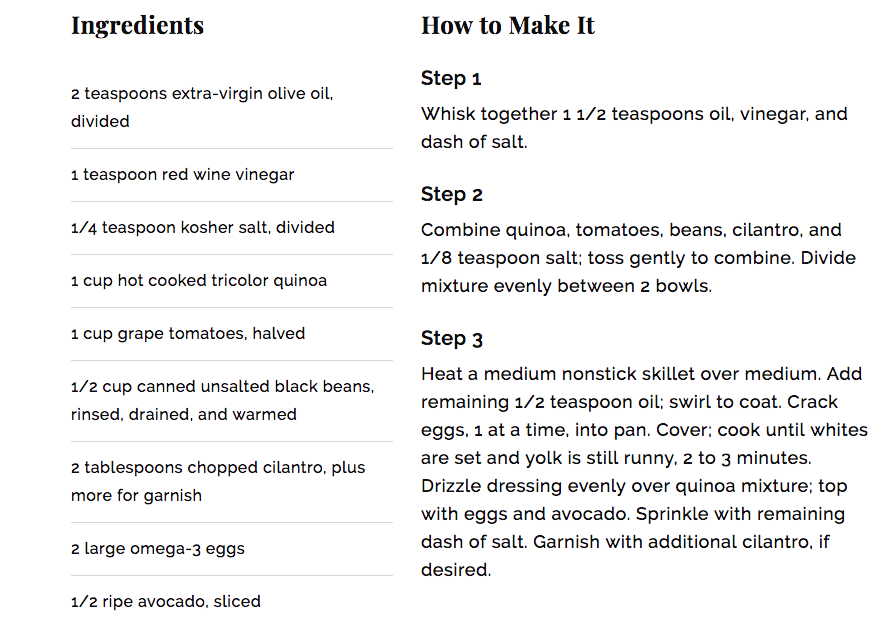
Easy and quick dinner idea:
I made this for dinner one night this week but unfortunately didn’t get a picture of it! It is super easy and so so good! Plus you get some fruit in from the avocado and some veggie in from the tomatoes!
I found the recipes at https://www.cookinglight.com/recipes/quinoa-bowls-avocado-egg!
Sources: Donatelle, R. J. (2018). My health. Upper Saddle River: Pearson.
 AndreaEstabrooksBlog